

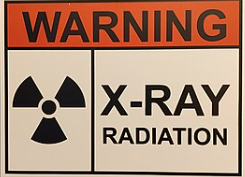
Radiation Safety Officer (RSO) Role in Compliance with AERB Regulations
The Radiation Safety Officer (RSO) is a key role in ensuring that facilities comply with national and international standards of radiation safety. In India, the AERB (Atomic Energy Regulatory Board) sets the standard and guidelines for safe use, handling, and disposal of radioactive materials and radiation-emitting devices.
1. The Role of AERB in Radiation Safety and Compliance
The AERB is the regulatory authority in India responsible for ensuring the safe use of radiation in various sectors like nuclear power generation, medical applications (radiology, radiotherapy), research, and industrial radiography.
The AERB sets guidelines and standards for radiation safety, which include:
- Radiation protection standards for workers, patients, and the public.
- Operational safety standards for equipment that uses or emits radiation (such as X-ray machines or nuclear reactors).
- Safety assessments for facilities handling radioactive materials.
AERB not only drafts these guidelines but also monitors compliance, conducts inspections, and handles licensing for facilities working with radiation.
RSO’s Role Under the AERB Framework
As an RSO, the primary responsibility is to ensure that the AERB’s radiation protection standards are followed at the facility. This includes:
- Compliance with AERB Safety Codes: A key part of the RSO’s role is to implement the AERB’s Safety Codes and Radiation Protection Regulations (RPR). These codes provide guidance on radiation exposure limits, workplace safety protocols, and handling hazardous materials. For instance, the AERB Safety Code No. 5 (Medical) details the safety standards for medical facilities using radiation for diagnosis or treatment, while the Code of Practice for Industrial Radiography provides safety measures for workers and the public in industrial settings.
- RSO ensures that safety protocols from the AERB’s Safety Code are incorporated into the hospital’s radiology department, from patient shielding to equipment calibration.
- Radiation Monitoring and Surveillance: The RSO is responsible for ensuring that radiation levels in the facility are monitored using proper radiation detection equipment, as per AERB’s guidelines. This involves environmental monitoring, personal dosimetry (to monitor individual exposure), and equipment checks.
- GM counters, scintillation counters, or ionization chambers) used by RSOs for radiation surveys
- Training and Education: The RSO is required to provide ongoing radiation safety training to all personnel working with or around radiation, in line with AERB requirements. This includes ensuring that employees understand the principles of radiation protection, safe handling of radioactive materials, and how to respond to potential radiation incidents.
Documentation and Record Keeping
Under AERB’s regulations, the RSO must maintain comprehensive documentation for audits and inspections. This includes:
- Radiation exposure records for all personnel.
- Radiation safety program records, which document the facility’s compliance with AERB’s standards.
- Maintenance and calibration records for radiation detection equipment.
- Radiation safety training logs to prove that staff have received proper education.
These records are vital for AERB inspections, which can occur periodically or in response to an incident. The RSO ensures that records are not only complete but also easily accessible during audits.
RSO is not just a safety officer but also an educator, monitor, compliance officer, and emergency responder—all while working within the regulatory framework set by the AERB.
- Adherence to AERB’s safety codes
- Radiation monitoring and compliance with AERB standards
- Emergency preparedness and response
- Regulatory documentation and licensing
. Key AERB Regulations and How RSOs Ensure Compliance
There are several critical regulations from AERB that RSOs must stay on top of:
- Radiation Exposure Limits: Under AERB’s guidance, RSOs ensure that radiation doses to workers and the public do not exceed the established limits. For workers, the annual dose limit for occupational exposure is typically 50 mSv (millisieverts), and for the public, it’s much lower (1 mSv/year).
- Radioactive Waste Management: The RSO also ensures that all radioactive waste is properly stored, handled, and disposed of according to AERB’s regulations. This includes keeping detailed records and managing the facility’s waste disposal system to prevent contamination or exposure.
- Licensing and Certification: Before any facility or department can operate radiation-emitting equipment or handle radioactive materials, it must be licensed by the AERB. The RSO plays a significant role in the licensing process by ensuring that the facility meets all safety standards, conducting initial safety assessments, and providing documentation for approval.
4. Emergency Preparedness and Response as per AERB Guidelines
The RSO is also critical in managing emergencies related to radiation incidents. AERB mandates that all facilities must have radiation emergency plans in place to handle spills, contamination, or accidental exposure.
Key components of the emergency plan include:
- Emergency Response Procedures: RSOs need to ensure that all staff are trained in emergency response procedures, such as how to evacuate contaminated areas, how to use decontamination kits, and how to manage radiation burns or exposure.
- Incident Investigation: If an incident occurs, the RSO is responsible for investigating the root cause, implementing corrective actions, and reporting the incident to AERB within the required timelines.
Stage 1: Strengthen Your Foundations (Single-variable calculus)
Before going multidimensional, make sure you’re comfortable with 1D calculus — everything here generalizes later.
Key Topics to Master:
Limits & continuity
Derivatives (rules, chain rule, implicit differentiation)
Applications (tangent lines, optimization, motion problems)
Integrals (definite/indefinite, substitution, by parts)
Fundamental Theorem of Calculus
Resources:
📘 Khan Academy — Calculus 1 & 2
📗 James Stewart: Calculus — Early Transcendentals (Ch. 1–6)
🎥 3Blue1Brown — Essence of Calculus (YouTube)
🌍 Stage 2: Step into Multivariable Calculus
Now you’ll move from functions like
𝑦
=
𝑓
(
𝑥
)
y=f(x) to
𝑓
(
𝑥
,
𝑦
)
f(x,y),
𝑓
(
𝑥
,
𝑦
,
𝑧
)
f(x,y,z), etc.
This is where higher dimensions come alive.
Main Concepts:
Functions of Several Variables
Visualizing surfaces and level curves
Partial derivatives
Tangent planes
Chain rule (multivariable version)
Gradients and Directional Derivatives
Gradient vector (
∇
𝑓
∇f) — direction of steepest ascent
How to find rate of change in any direction
Optimization in Higher Dimensions
Critical points and Hessian matrix
Local maxima/minima and saddle points
Lagrange multipliers (constrained optimization)
Multiple Integrals
Double integrals (
∬
∬) → area & volume
Triple integrals (
∭
∭) → 3D volume
Change of variables (polar, cylindrical, spherical coordinates)
Resources:
📘 Khan Academy — Multivariable Calculus
📗 Stewart Calculus, Chapters 12–15
🎥 3Blue1Brown — Divergence & Curl (Vector Calculus Visualized)
⚙️ Stage 3: Vector Calculus (Calculus in 3D)
This is the powerful, geometric part of multivariable calculus — and the foundation of physics, engineering, and machine learning.
Key Topics:
Vector Fields
Visualizing fields like
𝐹
⃗
(
𝑥
,
𝑦
,
𝑧
)
=
𝑃
𝑖
+
𝑄
𝑗
+
𝑅
𝑘
F
(x,y,z)=Pi+Qj+Rk
Gradient, Divergence, Curl
Line integrals (
∫
𝐶
𝐹
⃗
⋅
𝑑
𝑟
⃗
∫
C
F
⋅d
r
)
Surface Integrals
Integrating over curved surfaces
Flux of a field through a surface
The Big Theorems (Unification of Calculus)
Green’s Theorem
Stokes’ Theorem
Divergence Theorem
These show how line, surface, and volume integrals are all connected.
Resources:
📘 MIT OCW — Multivariable Calculus (Prof. Denis Auroux)
📗 Div, Grad, Curl, and All That by H.M. Schey (excellent intuitive book)
🎥 3Blue1Brown — Vector Calculus Visualizations
🧠 Stage 4: Apply Multidimensional Calculus
Once you know the theory, apply it to real contexts — this cements your understanding.
Applications by Field:
⚡ Physics: electric/magnetic fields, fluid flow
🧮 Machine Learning: optimization, gradient descent
🏗️ Engineering: stress tensors, heat transfer, aerodynamics
💰 Economics: multivariable optimization problems
🚀 Stage 5: Go Beyond — Differential Geometry & Advanced Topics
If you love multidimensional thinking, explore:
Curves and surfaces (parametric equations)
Jacobians and transformations
Differential forms (advanced Stokes’ Theorem)
Tensor calculus (used in relativity and deep learning)
Resources:
📘 Calculus on Manifolds — Michael Spivak
📗 Vector Calculus, Linear Algebra, and Differential Forms — Hubbard & Hubbard
🎓 MIT 18.06 (Linear Algebra) — useful for understanding vector spaces
🗺️ Suggested Learning Path (Summary)
Stage Focus Tools & Goals
1️⃣ Single-variable calculus Master limits, derivatives, integrals
2️⃣ Multivariable functions Learn partial derivatives & multiple integrals
3️⃣ Vector calculus Understand fields, flux, and major theorems
4️⃣ Applications Apply to physics, ML, engineering
5️⃣ Advanced math Explore manifolds, tensors, and geometry
💡 Tips to Accumulate Knowledge Efficiently
🧩 Visualize: use 3D graphing tools (GeoGebra 3D, Desmos 3D, CalcPlot3D)
✍️ Practice: solve by hand to internalize concepts
🔁 Connect ideas: notice how 1D rules extend into 2D/3D
🧭 Study slowly: each topic builds on the previous
💬 Teach or explain: explaining to others helps solidify understanding
Stage 1: Strengthen Your Foundations (Single-variable calculus)
Before going multidimensional, make sure you’re comfortable with 1D calculus — everything here generalizes later.
Key Topics to Master:
Limits & continuity
Derivatives (rules, chain rule, implicit differentiation)
Applications (tangent lines, optimization, motion problems)
Integrals (definite/indefinite, substitution, by parts)
Fundamental Theorem of Calculus
Resources:
📘 Khan Academy — Calculus 1 & 2
📗 James Stewart: Calculus — Early Transcendentals (Ch. 1–6)
🎥 3Blue1Brown — Essence of Calculus (YouTube)
🌍 Stage 2: Step into Multivariable Calculus
Now you’ll move from functions like
This is where higher dimensions come alive.
Main Concepts:
1 Functions of Several Variables
Visualizing surfaces and level curves
Partial derivatives
Tangent planes
Chain rule (multivariable version)
Gradients and Directional Derivatives
Gradient vector (
∇
𝑓
∇f) — direction of steepest ascent
How to find rate of change in any direction
Optimization in Higher Dimensions
Critical points and Hessian matrix
Local maxima/minima and saddle points
Lagrange multipliers (constrained optimization)
Multiple Integrals
Double integrals (
∬
∬) → area & volume
Triple integrals (
∭
∭) → 3D volume
Change of variables (polar, cylindrical, spherical coordinates)
Resources:
📘 Khan Academy — Multivariable Calculus
📗 Stewart Calculus, Chapters 12–15
🎥 3Blue1Brown — Divergence & Curl (Vector Calculus Visualized)
⚙️ Stage 3: Vector Calculus (Calculus in 3D)
This is the powerful, geometric part of multivariable calculus — and the foundation of physics, engineering, and machine learning.
Key Topics:
Vector Fields
Visualizing fields like
Gradient, Divergence, Curl
Line integrals (
Surface Integrals
Integrating over curved surfaces
Flux of a field through a surface
The Big Theorems (Unification of Calculus)
Green’s Theorem
Stokes’ Theorem
Divergence Theorem
These show how line, surface, and volume integrals are all connected.
Resources:
📘 MIT OCW — Multivariable Calculus (Prof. Denis Auroux)
📗 Div, Grad, Curl, and All That by H.M. Schey (excellent intuitive book)
🎥 3Blue1Brown — Vector Calculus Visualizations
🧠 Stage 4: Apply Multidimensional Calculus
Once you know the theory, apply it to real contexts — this cements your understanding.
Applications by Field:
⚡ Physics: electric/magnetic fields, fluid flow
🧮 Machine Learning: optimization, gradient descent
🏗️ Engineering: stress tensors, heat transfer, aerodynamics
💰 Economics: multivariable optimization problems
🚀 Stage 5: Go Beyond — Differential Geometry & Advanced Topics
If you love multidimensional thinking, explore:
Curves and surfaces (parametric equations)
Jacobians and transformations
Differential forms (advanced Stokes’ Theorem)
Tensor calculus (used in relativity and deep learning)
Resources:
📘 Calculus on Manifolds — Michael Spivak
📗 Vector Calculus, Linear Algebra, and Differential Forms — Hubbard & Hubbard
🎓 MIT 18.06 (Linear Algebra) — useful for understanding vector spaces
🗺️ Suggested Learning Path (Summary)
Stage Focus Tools & Goals
1️⃣ Single-variable calculus Master limits, derivatives, integrals
2️⃣ Multivariable functions Learn partial derivatives & multiple integrals
3️⃣ Vector calculus Understand fields, flux, and major theorems
4️⃣ Applications Apply to physics, ML, engineering
5️⃣ Advanced math Explore manifolds, tensors, and geometry
💡 Tips to Accumulate Knowledge Efficiently
🧩 Visualize: use 3D graphing tools (GeoGebra 3D, Desmos 3D, CalcPlot3D)
✍️ Practice: solve by hand to internalize concepts
🔁 Connect ideas: notice how 1D rules extend into 2D/3D
🧭 Study slowly: each topic builds on the previous
💬 Teach or explain: explaining to others helps solidify understanding